Pantry
Building a low-carb pantry from an ordinary supermarket
You do not need a health food shop, a subscription box or a single ingredient with the word keto on the packet. You need about twenty things, and they are all in the aisles you already walk down.
There is an industry built on convincing people that eating fewer carbohydrates requires a whole new set of ingredients. It does not. The most useful low-carb pantry in the country is assembled from normal supermarket stock, and almost none of it carries a diet label or a diet price.
Here is the list, and more usefully, here is what each thing is actually for.
Fats and oils
Butter. Unsalted if you cook a lot, because it lets you control seasoning; salted if you mostly eat it. Either way, real butter rather than a spread — spreads are emulsions with water and vegetable oil in them and they behave badly in a hot pan.
Olive oil, two bottles. A cheap one for cooking and a good one for finishing. This is not snobbery: heating a peppery, expensive oil destroys the thing you paid for.
Clarified butter or ghee. Butter with the milk solids removed, so it takes much more heat before it burns. If you fry a lot, this is the single most useful upgrade in the list. It sits in the world food aisle of most large supermarkets for less than the same weight of butter.
One neutral high-heat oil. Groundnut or refined rapeseed. For the times you want to sear something hard and do not want it to taste of olives.
Protein you can keep
Eggs, more than you think. A dozen is a week’s worth of emergencies.
Tinned oily fish. Sardines, mackerel, tuna in oil rather than brine. Cheap, keeps for years, turns a bag of leaves into lunch.
Hard cheese. Parmesan, mature cheddar, pecorino. It grates over vegetables and it thickens sauces, which makes it a cooking ingredient as much as a snack.
Cheap braising cuts in the freezer. Beef shin, lamb shoulder, chicken thighs, pork belly. These are the cuts that reward slow cooking, and they are consistently the cheapest things on the meat counter.
Vegetables that hold up
Fresh vegetables are the part of the list that has to be bought weekly, so the pantry version is the ones that keep.
- Cauliflower — rice, mash, roast, soup. The workhorse.
- Courgette — ribbons, roasted chunks, fried in butter.
- Cabbage — keeps for weeks in the bottom of the fridge and is excellent shredded and fried hard in fat.
- Spinach — wilts into everything, and a bag reduces to almost nothing, so buy two.
- Onions and garlic — used in small quantities. Onion is not carb-free, but half an onion across a dish that feeds four is not the thing standing between you and your goals.
Frozen spinach, frozen green beans and frozen cauliflower are all perfectly good and mean you are never fully out of vegetables.
The store cupboard
Tinned tomatoes. The base of most braises. Whole plum tomatoes crushed by hand are better than the chopped ones, which are usually the tomatoes that were not good enough to sell whole.
Full-fat tinned coconut milk. Sauces, curries, the overnight chia pots. Buy the one with the shortest ingredients list.
Stock, or the makings of it. A decent stock is the difference between a braise that tastes of something and a braise that tastes of water and salt. Cubes are fine. Better still, keep the bones from a roast chicken in the freezer.
Vinegars — red wine and cider. The thing that rescues a dish that tastes heavy. A teaspoon of acid at the end does what a squeeze of lemon does, without needing a lemon in the house.
Mustard. Dijon for sauces, wholegrain for everything else. It emulsifies, so it holds a dressing together and stops a cream sauce splitting.
Nuts and seeds, whole rather than ground. Almonds, walnuts, pumpkin seeds. Extremely easy to overeat, so buy them in small bags rather than the catering sack.
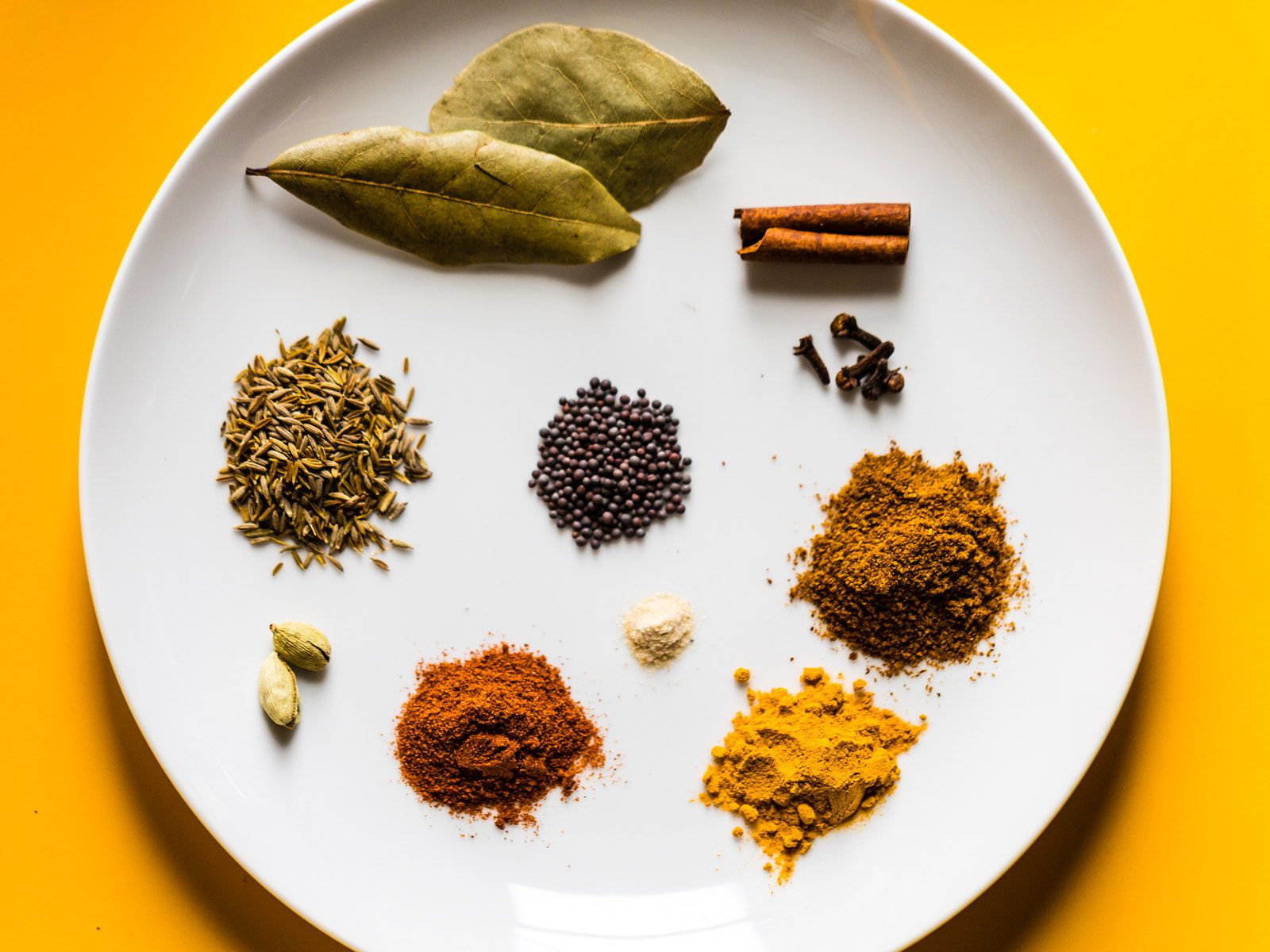
Spices you will actually use. Cumin, coriander, smoked paprika, chilli flakes, black pepper, bay. Whole spices keep their flavour far longer than ground ones, and bloom them in hot fat at the start of cooking rather than stirring them into liquid at the end.
Read the label on these four
Some categories look safe and are not, because sugar goes in where fat came out, or where the process needed it.
| Looks fine | What to check |
|---|---|
| Yoghurt | Anything fruit-flavoured or low-fat has usually had sugar added. Buy plain, full-fat, add your own berries. |
| Cured and cooked meats | Glazed hams, cheap sausages and most bacon marinades contain sugar. Read the first four ingredients. |
| Sauces and dressings | Ketchup, barbecue sauce, sweet chilli, balsamic glaze and most bottled dressings are largely sugar. |
| “Low carb” bread and bars | Some are genuinely useful, many are wheat with a health claim on the front. The ingredients list settles it. |
That last row is the one worth being sceptical about. The most reliable rule in this whole area: the more emphatically a package advertises being suitable for your diet, the more closely the ingredients list deserves reading.
Almost nothing in a low-carb kitchen needs to come from a specialist shop. The exceptions are worth knowing precisely because there are so few of them.
The specialist items that genuinely earn it
Three, and only three, are worth going out of your way for.
Almond flour. Ground almonds sold as flour, finer than the ground almonds in the baking aisle, which matters if you want a dough rather than a paste. The baking-aisle version works for most things and costs less.
Psyllium husk. A soluble fibre that gels when wet. It is the reason low-carb flatbreads can be rolled and folded rather than cracking apart, and there is no ordinary-supermarket substitute for what it does.
A proper hard cheese for grating. Not specialist exactly, but buying a wedge of real parmesan rather than the pre-grated tub changes how often you reach for it.
What this costs
Less than the equivalent carb-heavy shop, in our experience, mostly because the expensive habits go with it: no sandwich at lunch, no snacks at four, fewer trips to the shop for something you forgot. The braising cuts are cheap, eggs are cheap, cabbage is cheap. The money goes on butter, cheese and good oil, and that is a trade most people find they are happy with.
Start with the ghee and the tinned tomatoes. Those two turn the rest of the list into dinner.
Ketolife writes about cooking. Nothing here is medical advice — if you are managing a health condition or taking medication, talk to your doctor before changing how you eat.
All articles