Eating out
Eating out without making it everyone's problem
You can eat low-carb in almost any restaurant without a single special request. The trick is knowing what to order, not knowing how to negotiate.
There is a particular kind of person who turns every restaurant meal into a fifteen-minute interview with the waiter about the composition of the sauce. Do not be that person. It makes the meal worse for everyone at the table, including you, and it is almost never necessary.
Nearly every menu in the country already contains something that works. You just have to know where to look.
The shape of every menu
Strip a menu down and most of them offer the same three things: a piece of protein cooked over heat, a sauce, and a starch. The starch is the only part you are declining, and on most menus it is either a side you simply do not order or a component the kitchen leaves off without comment.
So the order of operations is: find the grilled or roasted protein, look at what it comes with, swap the starch for a vegetable or a salad. That is the entire technique. It works in nine restaurants out of ten and requires one sentence.
By cuisine
Steakhouse and grill. The easiest room in the world. Steak, chop or fish, green vegetables, hollandaise or béarnaise or garlic butter. Skip the chips, order the spinach twice. If there is a chateaubriand for two, it comes with sauces and no bread.
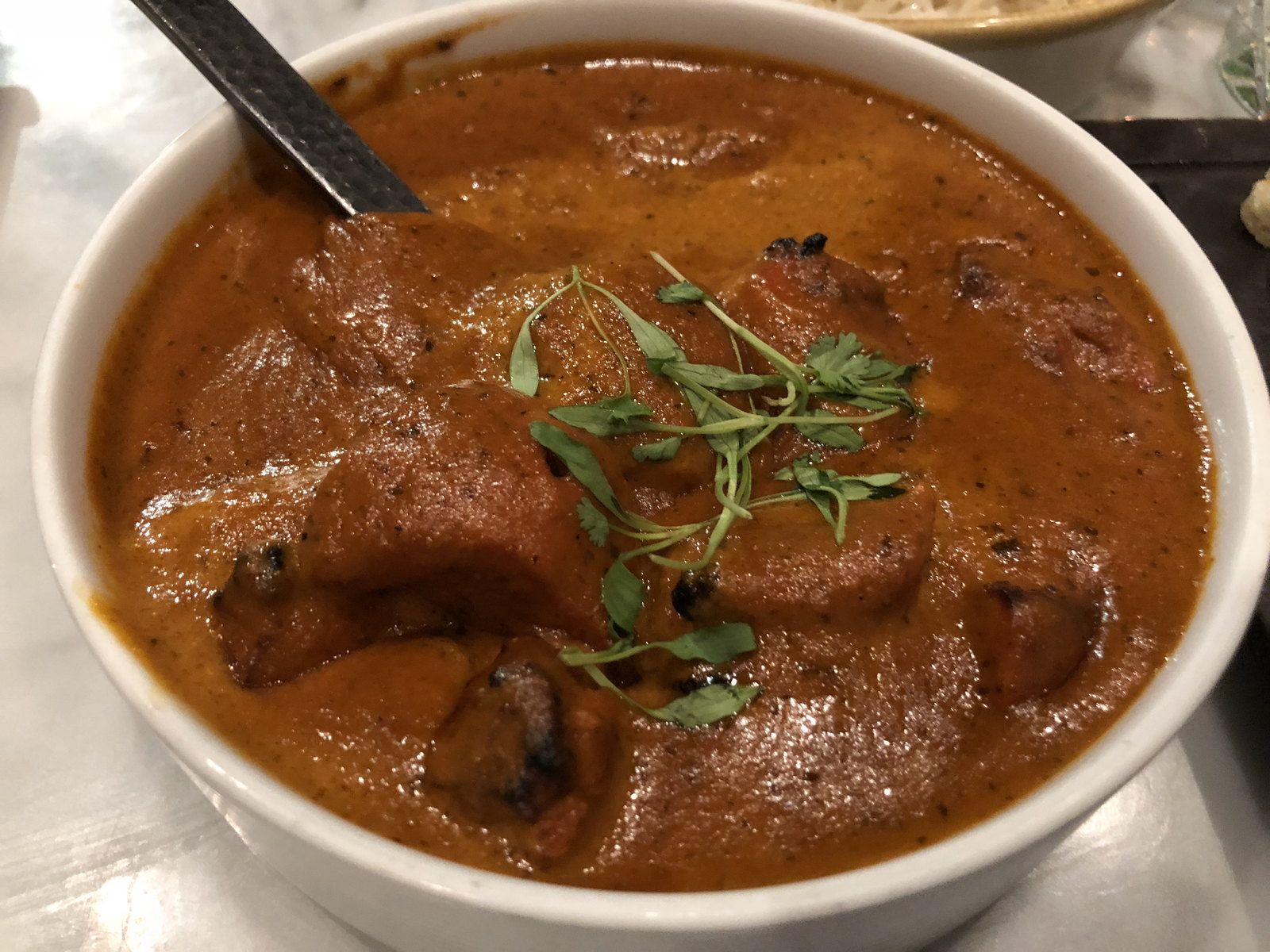
Indian. Better than its reputation. Tandoori and tikka dishes are marinated in yoghurt and spice and cooked dry — no thickener, no sugar. Order those rather than the creamy restaurant curries, which are often finished with sugar and sometimes thickened with flour or ground cashew. Saag paneer, any dry-fried vegetable dish, raita. Decline the rice and the bread and nobody will blink.
Italian. Order from the secondi rather than the primi — the primi is the pasta and risotto course. Grilled fish, veal, chicken, a plate of cured meats and cheese to start, salad dressed at the table. The bread basket is the only real trap and it is a trap you can simply not reach into.
Chinese and Thai. Harder, because sugar is in the sauces rather than on the side. Steamed fish with ginger and spring onion, roast duck, stir-fried greens with garlic, satay without the peanut sauce, clear soups. Avoid anything described as sweet, sticky, glazed or crispy, since crispy usually means cornflour.
Japanese. Sashimi is the obvious answer. Also grilled fish, yakitori without the glaze, edamame, miso soup, seaweed salad. The rice under the sushi is the thing to leave.
Middle Eastern and Greek. A very good room. Grilled meat, halloumi, aubergine, yoghurt dips, olives, salads. Leave the flatbread and the rice. This cuisine has more good options than almost any other.
Pub food. Depends entirely on the pub. A roast dinner with the potatoes swapped for extra vegetables is usually possible and usually fine. Steak, gammon, fish of the day. The thing to avoid is anything battered, breaded or in a pie.
Breakfast out. Full English, no toast, no beans, no hash brown. Nearly every café in Britain will do this without being asked twice.
The two questions actually worth asking
Most of the time you ask nothing. When you do ask, make it one of these.
“Is the sauce thickened with flour?” This is a real cooking question that kitchens can answer, and it distinguishes a reduced sauce from a roux-based one.
“Could I have the vegetables instead of the potatoes?” A swap, not a modification. Kitchens do this constantly and it costs them nothing.
What not to do is ask for a dish to be substantially rebuilt. A kitchen doing two hundred covers cannot redesign a plate mid-service, and a dish reverse-engineered at the pass is usually worse than the dish next to it that already worked.
Order the thing that was designed to be what you want. Do not try to convert the thing that was not.
Set menus, weddings and work dinners
Fixed menus are where this gets genuinely awkward, and the honest answer is that sometimes the food is going to be a bowl of pasta and there is no version of the evening in which you get something else.
Two things help. Eat properly beforehand so you are not arriving hungry to a room where your options are bread rolls and wine. And if there is a choice offered in advance — a form, an email, an RSVP with options — that is the moment to pick the fish, weeks before anyone is under pressure. Handling it at the planning stage costs nobody anything; handling it at the table costs everyone ten minutes.
Other people’s houses
Different rules entirely, because this is not a transaction. Someone has cooked for you.
Eat what you are given, leave the potatoes if you want to, say thank you, and do not deliver a lecture on insulin over the dinner table. One meal is one meal. Being a good guest matters more than a perfect week, and the fastest way to make everyone around you resent how you eat is to make it their responsibility to accommodate.
If they ask in advance, answer plainly and briefly: “I’m eating fairly low-carb at the moment, but genuinely don’t cook around me — I’ll happily eat the meat and the veg.” That sentence has never caused a problem.
Drinks
Dry wine, spirits with soda, and that is broadly it. Beer is mostly out. Cocktails are mostly sugar. Tonic has more sugar in it than people expect, so soda water and a slice of lime is the reliable order.
Worth knowing: alcohol tends to hit harder when you are eating this way, and people notice it most in the first few weeks. Whether that matters for you specifically, and how it interacts with anything you take, is a question for your doctor rather than for us. Two glasses landing like three is the practical observation; we will leave the explanation to people qualified to give it.
The short version
Grilled protein, green vegetables, a sauce that was reduced rather than thickened, and no bread basket. Say one sentence to the waiter, or none. Then put the menu down and pay attention to the people you came with.
Ketolife writes about cooking. Nothing here is medical advice — if you are managing a health condition or taking medication, talk to your doctor before changing how you eat.
All articles