Technique
Cooking with fat properly: heat, browning, and when to stop
Low-carb cooking puts fat at the centre of the pan, and most people have spent their whole lives being taught to use as little of it as possible. The technique has to change too.
If you grew up being told to use a teaspoon of oil and a non-stick pan, cooking with real quantities of fat feels wrong for about a month. Then it stops feeling wrong, and the food gets considerably better — but only if you learn what fat is actually doing in the pan, because the failure modes are different from the ones you are used to.
Fat is a heat-transfer medium, not a flavour
The first mental shift: the oil or butter in your pan is mostly there to move heat from the metal into the food. Food is a bad conductor and has an uneven surface. A dry pan touches maybe a tenth of that surface; a film of fat touches all of it. That is why a lightly oiled pan browns unevenly and a properly fatted one browns all over.
This is also why “just a spray of oil” produces pale, steamed, slightly grey food. There is not enough medium in the pan to carry heat into the surface faster than the food’s own moisture can cool it down.
Which fat, at which heat
The number that matters is the smoke point — the temperature at which a fat starts to break down, turn acrid and produce visible smoke. Past it, the food tastes burnt regardless of whether it is cooked.
| Fat | Comfortable at | Where it belongs |
|---|---|---|
| Butter | Low to medium | Finishing, gentle frying, sauces |
| Extra virgin olive oil | Low to medium | Dressings, gentle frying, finishing raw |
| Clarified butter / ghee | Medium to high | General frying, searing, blooming spices |
| Refined olive oil | Medium to high | Everyday frying |
| Groundnut / refined rapeseed | High | Hard searing, anything you want to go very dark |
| Animal fats — beef dripping, duck fat | High | Roasting vegetables, searing meat |
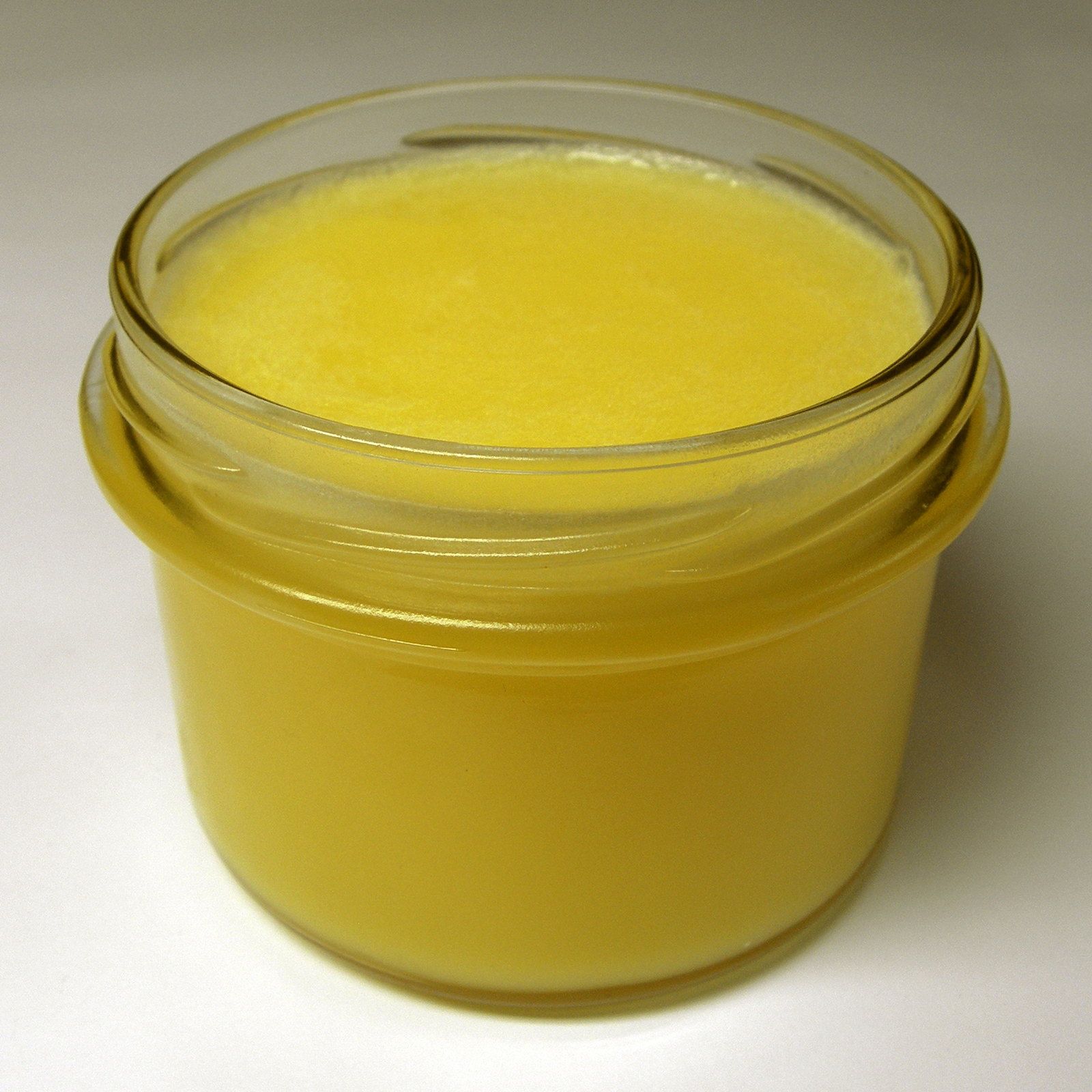
Butter smokes early because of the milk solids in it, not the fat. Remove them — which is all clarified butter is — and the same fat handles far more heat. This is the reason ghee is the most practically useful fat in a low-carb kitchen: it takes a searing heat and it tastes like butter.
The usual trick if you want butter flavour at frying heat is to use a high-heat oil to do the cooking and add cold butter at the end, off the heat, swirled in. You get the taste without the burnt solids.
Your pan is not hot enough
This is the most common fault by a wide margin, and it is easy to diagnose. Put your food in. If it does not make a noise, the pan was too cool.
What you want is an audible, sustained sizzle that does not fade. A fade means the surface has dropped below the temperature at which water boils off, so the food has started releasing moisture into the pan faster than it evaporates. Now it is stewing in its own juices, and it will stay grey.
Three things cause it:
- Not preheating. Fat into a cold pan, food in straight after. Heat the pan, then the fat, then wait for the fat to move freely and shimmer.
- Crowding. Four chicken thighs in a pan sized for two. All that moisture has nowhere to go. Two batches take longer and taste better.
- Cold food. Meat straight from the fridge drops the pan temperature hard. Fifteen minutes on the counter first makes a visible difference.
If the pan goes quiet, stop adding things. Take something out, let it come back up to temperature, and carry on.
What browning actually is
The brown on a seared steak or a roasted cauliflower floret is not simply “cooked”. It is a set of reactions between amino acids and sugars that only really get going above about 140°C, and they create hundreds of new aromatic compounds that were not in the raw ingredient. That is where the flavour in roast meat, browned butter and caramelised onions comes from.
Two things stop it: water and low heat. Water on the surface has to boil off before anything can climb past 100°C, which is why patting meat dry with kitchen paper before it hits the pan is not a fussy chef habit — it is the difference between browning and boiling.
This matters more on low-carb food than it used to, because you no longer have bread or rice or pasta contributing their own toasted, starchy flavours to the plate. The browning has to come from the protein and the vegetables instead. Roast the cauliflower until the edges are properly dark. Let the halloumi blister. Take the mushrooms further than feels comfortable.
Emulsions, and why sauces split
Once you are making pan sauces with cream and butter rather than flour, splitting becomes the thing that goes wrong. A split sauce is one where the fat has separated back out into a greasy layer.
Three rules cover nearly all of it:
- Reduce first, add dairy last. Boil the liquid down while it is still watery. Cream added early and then boiled hard will separate.
- Take the pan off the heat before the butter goes in. Swirl it in cold, in pieces. Residual heat is enough to melt it without breaking the emulsion.
- A little mustard or egg yolk stabilises it. Both contain emulsifiers. Half a teaspoon of Dijon in a cream sauce is insurance, and it tastes good anyway.
If a sauce does split, a splash of cold water or stock whisked in hard off the heat will often bring it back.
When to stop
Here is the part that most low-carb cooking content leaves out: there is a point at which adding more fat stops improving the food.
Past a certain amount, fat does not make a dish richer, it makes it greasy. The signs are obvious once you look for them — a slick pooling at the edge of the plate, a coating on the roof of your mouth, food that feels heavy after four mouthfuls rather than satisfying after ten. A sauce that has gone past the point of pleasure does not taste of more butter; it tastes of less of everything else.
Use enough fat to cook properly and enough to make the dish taste good. That is the brief. Fat is not a scoring system, and food that is unpleasant to eat is not a nutritional achievement.
The plate you want is one where you notice the meat, the browning and the seasoning — and the fat is what made all three possible without announcing itself.
Ketolife writes about cooking. Nothing here is medical advice — if you are managing a health condition or taking medication, talk to your doctor before changing how you eat.
All articles